WFP to increase food ration from US$8 to US$10 for all Rohingya refugees in Cox’s Bazar

WFP to increase food ration from US$8 to US$10 for all Rohingya refugees in Cox’s Bazar

DHAKA – The United Nations World Food Programme (WFP) is gearing up to restore its critical food assistance for the entire Rohingya population in Cox’s Bazar. Starting 1 January 2024, WFP will increase the food ration from US$8 to US$10 per person per month, and gradually add locally fortified rice to its food assistance package.  

“The year 2023 was a tumultuous one for the Rohingya in Bangladesh, who lived through multiple fire outbreaks, cyclones, and, for the first time, ration cuts. The rapid deterioration of the food and nutrition situation in the camps is extremely worrying. Through all this, the donor community stood with the Rohingya – it’s all thanks to its generous contributions we can now have this increase and also add locally fortified rice to WFP’s food assistance package,” said Dom Scalpelli, WFP Country Director in Bangladesh. 

A sharp decline in resources led to a reduction in the Rohingya’s food entitlement in 2023. In March, the food voucher value for the entire population in the Cox’s Bazar camps was reduced from US$12 to US$10, and in June, to US$8 per person per month. Even before the ration cut, 40 percent of children under five were chronically malnourished and 12 percent were acutely malnourished.

Since then, WFP’s monitoring has shown a sharp decrease in food consumption and an increase in negative coping mechanisms among the population. By November, 90 percent of the population did not have adequate food consumption, up from 79 percent in June. Even more worrying is the fast deterioration of the nutrition status among children.

The preliminary results of the latest nutrition survey show that global acute malnutrition (GAM) has risen to 15.1 percent – the highest since the onset of the 2017 influx, exceeding the emergency threshold of 15 percent, according to WHO emergency classification.

In 2023, the refugees again endured multiple fire hazards and repeatedly cyclones, monsoon floods and landslides. Their vulnerability has further deepened due to the rising violence and insecurity in the camps, as well as human trafficking. As of 30 November, 3,468 Rohingya had embarked on risky boat journeys, almost half are women and children.

In addition to increasing the ration, WFP will begin the distribution of locally fortified rice to the Rohingya population. This will commence in one or two camps and gradually extend to all camps in Cox’s Bazar and on Bhasan Char Island.

“We remain fully committed to the Rohingya while supporting vulnerable Bangladeshis who have so generously hosted the Rohingya over the years. We are immensely grateful to all our donors for their unwavering support, and we count on them to step up even further to ensure we can provide the Rohingya with a full and nutritious ration in 2024,” added Scalpelli.

WFP currently has a funding gap of US$61 million to increase the food ration to the full amount, now US$12.5, with locally fortified rice added.
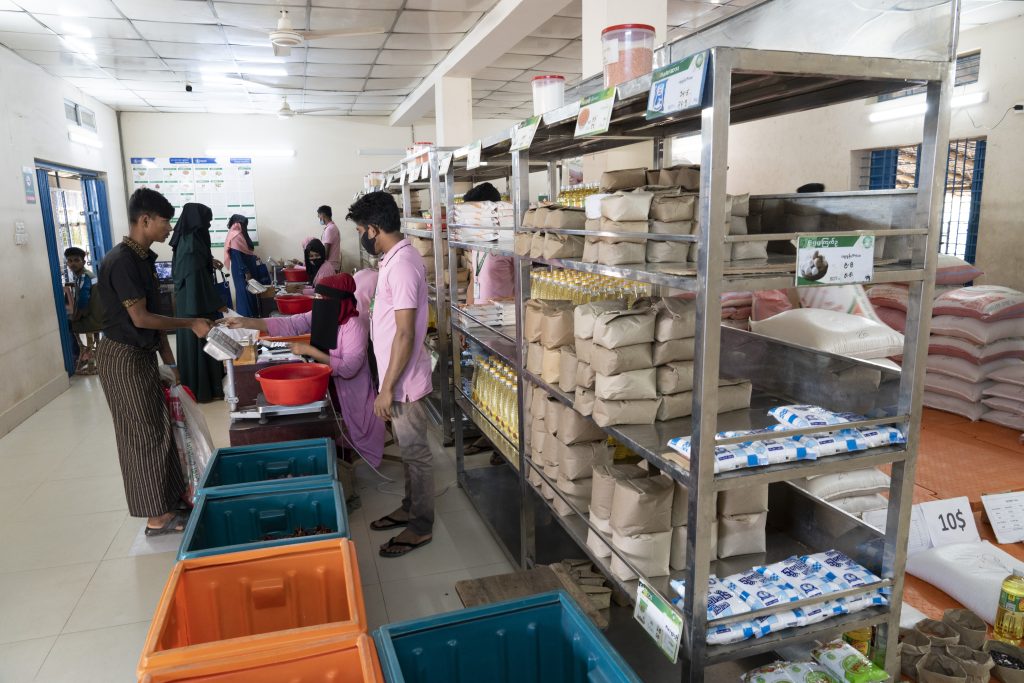
Photo Credit: WFP/Saikat Mojumder

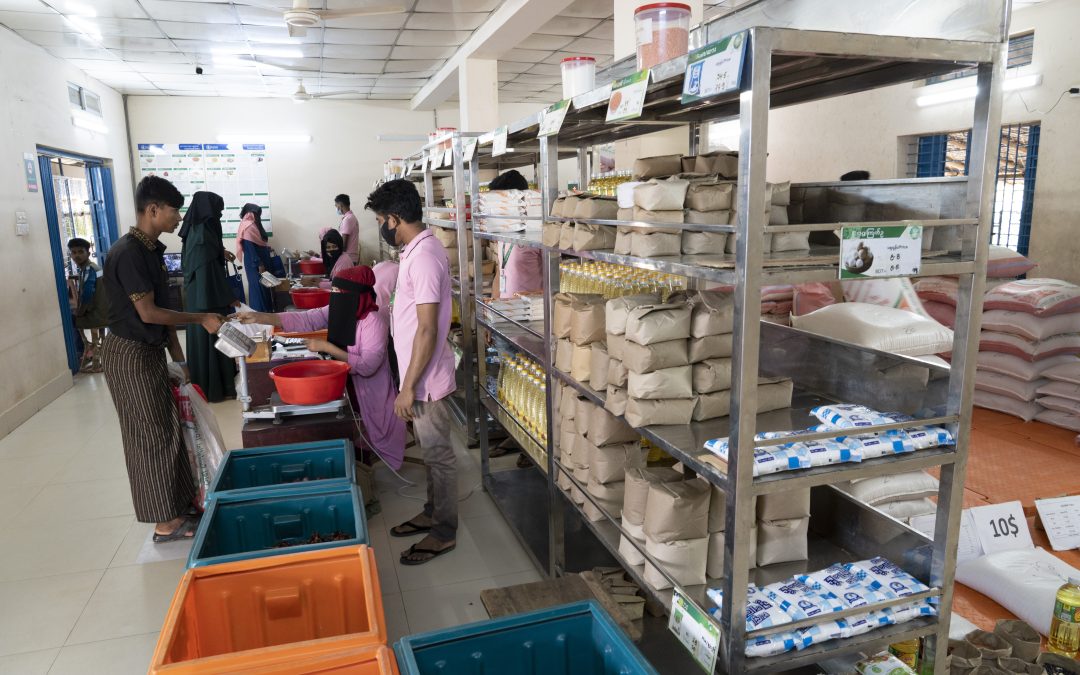
Caption: Rohingya refugees collect their monthly food ration at a World Food Programme (WFP) e-voucher outlet in Cox’s Bazar. Starting January 1, 2024, WFP will increase the ration from $8 to $10 and gradually add locally fortified rice to its food assistance package. 

#                 #                   #

The United Nations World Food Programme is the world’s largest humanitarian organization saving lives in emergencies and using food assistance to build a pathway to peace, stability and prosperity for people recovering from conflict, disasters and the impact of climate change.

Follow us on X @wfp_bangladesh, Facebook @WFPinBangladesh

For more information please contact:

Kun Li, Head of Partnerships, Communications and Reporting, WFP Bangladesh

Mobile: +88 013 2284 6137 Email: [email protected]

Tareq Salahuddin, Communications Officer, WFP Bangladesh

Mobile: +88 017 3009 5592 Email: [email protected]
UN and Partners Appeal for Sustained Support as Rohingya Refugee Influx Marks 6th Year in Bangladesh

UN and Partners Appeal for Sustained Support as Rohingya Refugee Influx Marks 6th Year in Bangladesh

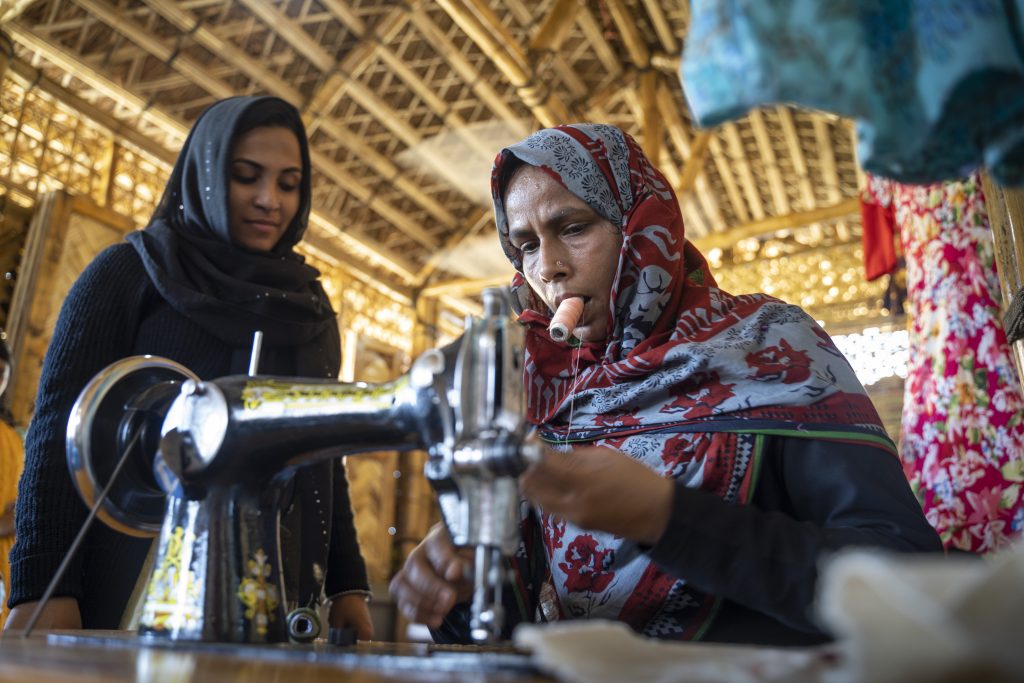
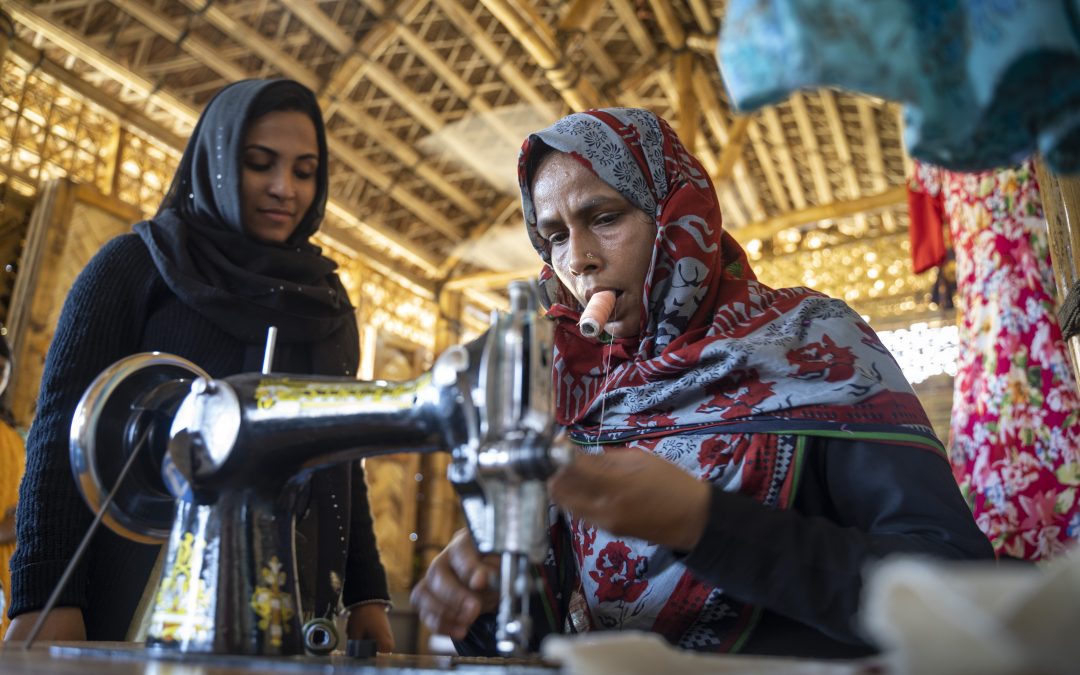
Rohingya women receiving tailoring training at a refugee camp in Cox’s Bazar, Bangladesh. Photo: ISCG, Saikat Mojumder.

23 Aug 2023 – The UN and partners call for renewed commitment from the international community for financial support to sustain the humanitarian response and political support to find solutions for nearly one million Rohingya refugees in Bangladesh.

25 August marks six years since over 700,000 Rohingya women, men and children from Myanmar fled to Bangladesh. They joined hundreds of thousands of other Rohingya who had previously sought refuge in the country.

As the humanitarian condition in the world’s largest refugee settlement worsens, the challenges surrounding this protracted crisis continue to increase. Steep funding decline forces humanitarian actors to focus on the most critical and life-saving needs. For the first time, it has led to the reduction of refugees’ food assistance, raising concerns about cascading dramatic consequences: rising malnutrition, school dropout, child marriage, child labour and gender-based violence.

With their strength and resilience, the Rohingya refugees have formed the backbone of the humanitarian response over the past six years and supported the communities hosting them.

UN and partners urge support to enable Rohingya refugees to benefit from education and skills development, vocational training, and other forms of capacity-building. This will equip refugees for their eventual return and ensure their dignity, safety, and productivity in Bangladesh. This can empower them to address some of their needs, as the refugees do not wish to rely on diminishing humanitarian aid.

A dignified and sustainable return to Myanmar remains the primary solution to this crisis. Rohingya refugees continue to tell us they want to return to Myanmar when it is safe to do so voluntarily. The international community must renew its efforts to make that possible. As the United Nations remains ready to support efforts to create conditions conducive to sustainable return, the UN and its partners need to be provided unimpeded, meaningful, and predictable access in Rakhine State in Myanmar, including assisting, and monitoring the return of refugees.

The collective goal should be to ensure Rohingyas’ voluntary return to Myanmar — to their places of origin or choice, being able to move freely and access documentation, citizenship pathways, services, and income-generation opportunities to rebuild their lives.

Until they can return, they remain in refugee camps in an area off the coast of the Bay of Bengal, which is extremely vulnerable to cyclones, flooding, landslides, fire outbreaks and the impacts of climate change. These devastate the congested camps, and their frequency barely leaves time to rebuild shelters made of bamboo and tarpaulin before the next disaster strikes. UN continues to prioritise a climate action strategy, advocating for weather-and fire-resistant refugee shelter materials to save millions of dollars in maintenance and rebuilding costs.

Hosting nearly one million Rohingya refugees, Bangladesh has demonstrated humanitarian commitments and a generosity that must be acknowledged through continued investment in Rohingya refugees and Bangladeshi host communities. The international community must step up to share responsibility for the response. Stakeholders are encouraged to expand their support and commitments through pledges in support of the Rohingya situation at the Global Refugee Forum in Geneva in December 2023.  

Humanitarian agencies have appealed for $876 million this year to assist around 1.47 million people, including Rohingya refugees and local Bangladeshis. However, as of mid-August 2023, funds for the Joint Response Plan only reached 28.9 per cent of this appeal, dismally highlighting the need for consistent and predictable financial backing to prevent a broader humanitarian crisis.

Unveiling the General Health Card: A Comprehensive Health Companion for Rohingya Refugees

Unveiling the General Health Card: A Comprehensive Health Companion for Rohingya Refugees

A Landmark Step Towards Accessible and Informed Medical Care

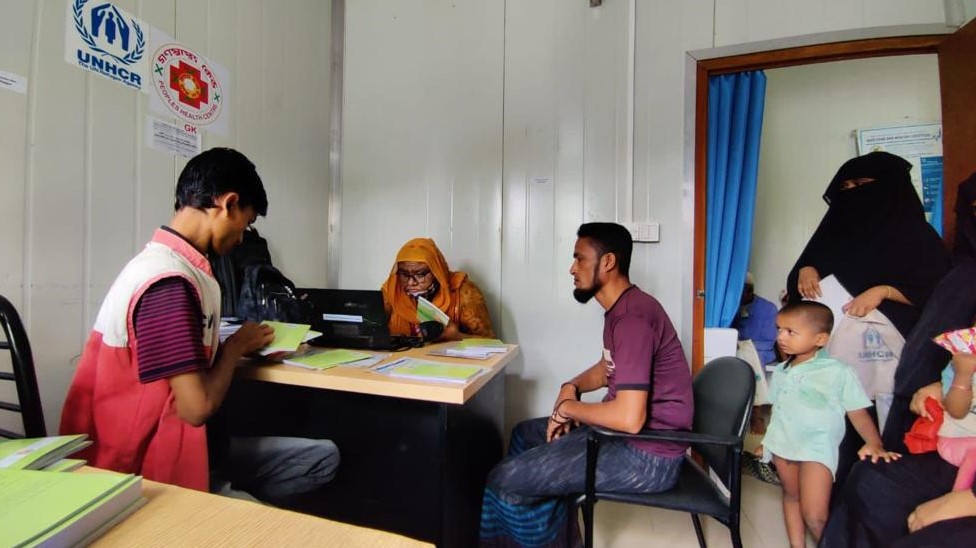
In an event held today, the Rohingya refugee community witnessed a monumental stride towards accessible and comprehensive healthcare with the introduction of the General Health Card. The initiative promises to improve healthcare services for thousands living in the camps, facilitating a seamless flow of medical information and enhancing overall well-being.

The Health Sector Lead agency, WHO, spearheaded the development of the General Health Card, an effort that underscores collaboration between healthcare providers, refugee communities, and international organisations. The event, attended by the Refugee Relief and Repatriation Commissioner (RRRC), marked the culmination of meticulous planning and dedicated work.

Designed to consolidate individual medical information, the General Health Card is poised to transform healthcare delivery within the camps. It enables doctors and health care providers to access a patient’s complete health history, including treatment received, surgical procedures, medical investigations, and more – all in one place.

The introduction of the General Health Card carries far-reaching benefits, including:

  • Immediate Accessibility: Medical information is readily available whenever needed, eliminating delays in diagnosis and treatment.
  • Informed Care: Healthcare providers better understand patients’ health history, leading to tailored treatment plans.
  • Continuity of Care: Medical records are portable, ensuring consistent and well-informed care during transitions.

The development of the General Health Card was made possible through funding and support from the UNHCR, IOM, UNFPA, UNICEF and WHO.

General Health Cards will be distributed at designated health facilities within the camps. Community Health Workers will guide residents through the process, ensuring a smooth and organised distribution.

The introduction of the General Health Card signifies a monumental step towards empowering Rohingya refugees with accessible and informed healthcare. By providing an avenue for individuals to actively engage in their healthcare journey, this initiative is poised to positively impact the lives of thousands.

Rohingya refugee children of all ages are now studying under the Myanmar curriculum

Rohingya refugee children of all ages are now studying under the Myanmar curriculum

Despite fires burning down learning centres and Cyclone Mocha’s wrath, a record 300,000 Rohingya refugee children attend first day of school.

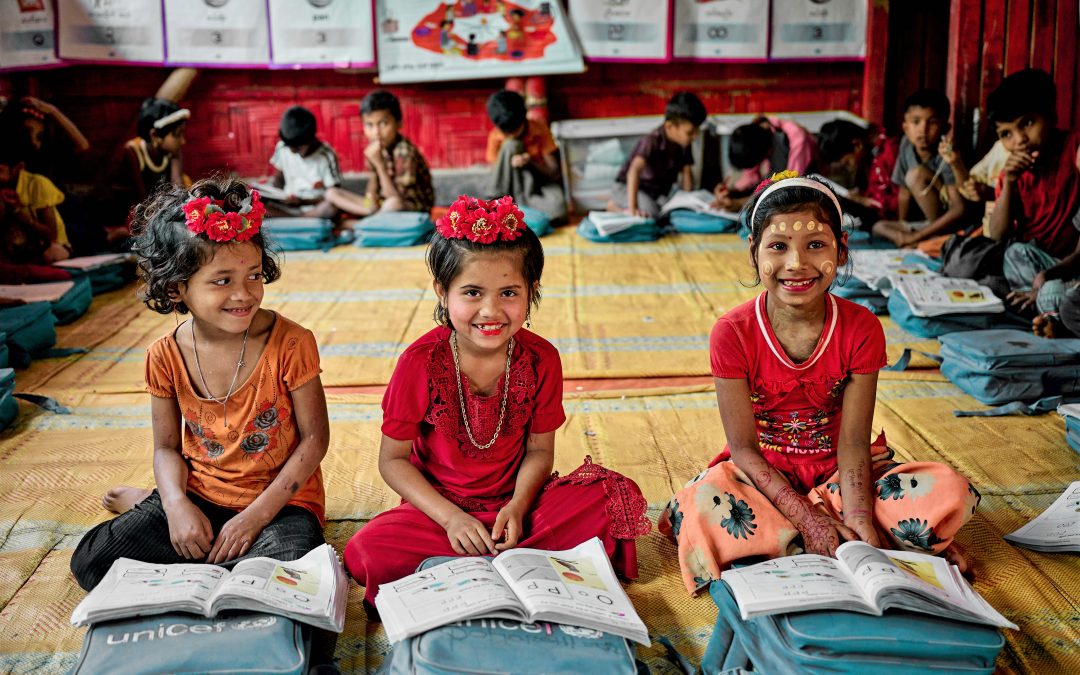
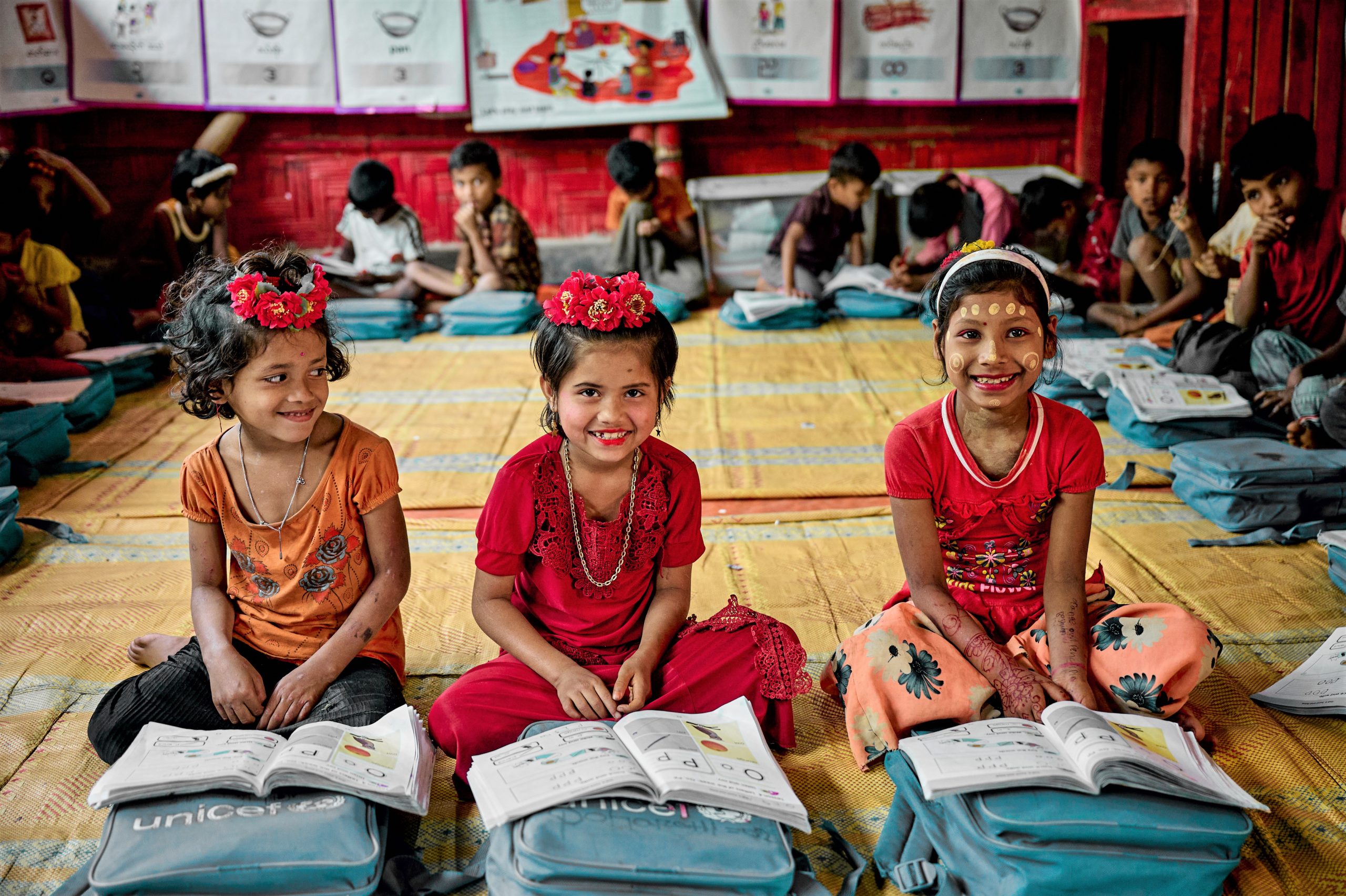
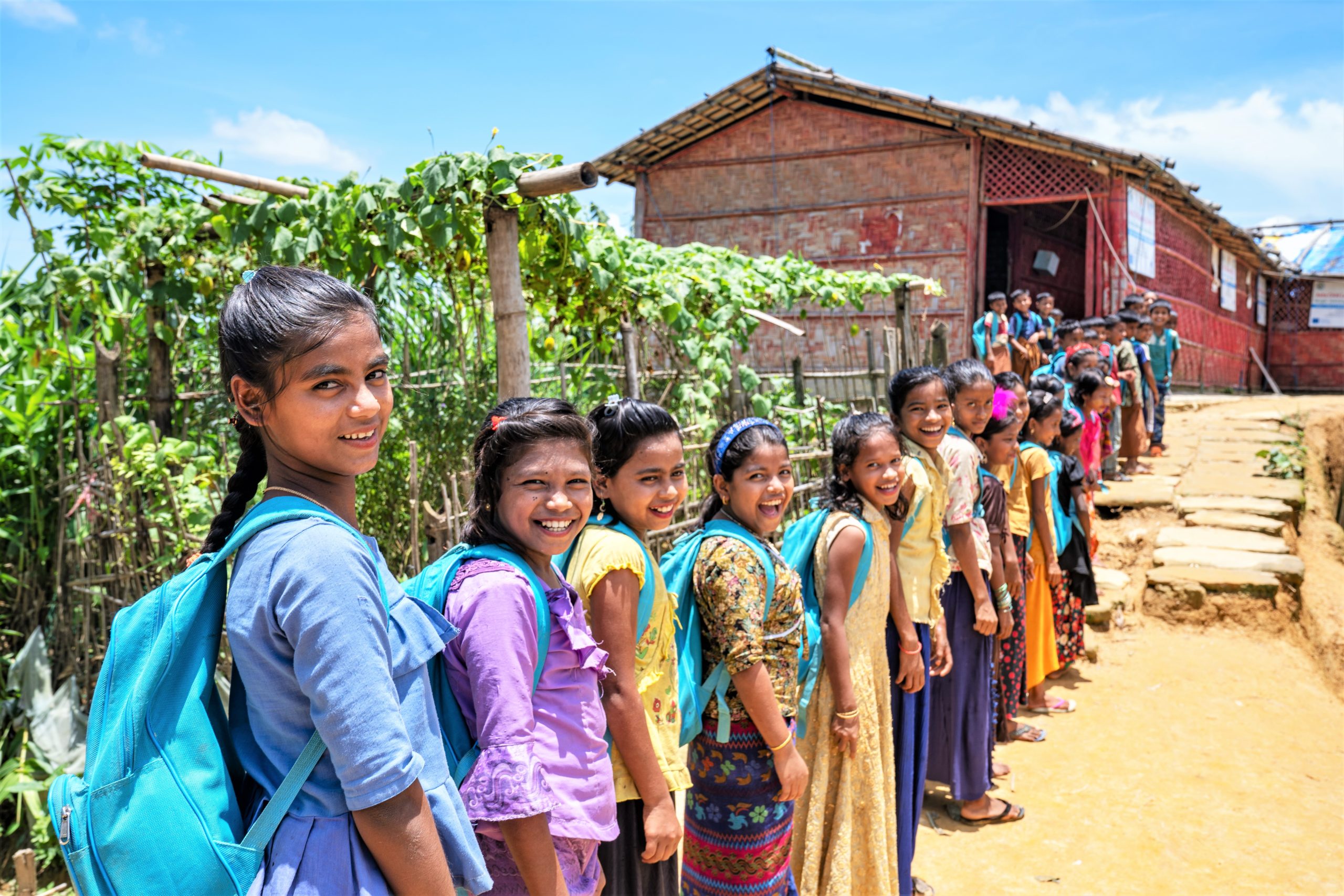
Rohingya girls happily posing for a photo inside the Mukti learning center. Pahartoli-1/2, Camp-4, Ukhia, Coxs Bazar, Bangladesh. Photo ©️ UNICEF, Sujan

COX’S BAZAR, Bangladesh, 23 July 2023 – Against the odds of displacement, fires burning down learning centres, and Cyclone Mocha’s wrath, classrooms in the Rohingya refugee camps in Bangladesh are filling up today with children, excited on the first day of school. Thanks to expanded education opportunities for teenagers and girls, a record 300,000 children are enrolled for the 2023/24 school year.

The new academic year marks the first time that Rohingya refugee children of all ages will be studying under the Myanmar Curriculum. Since its launch in 2021, this formal curriculum has gradually been expanded with grades 3-5 and grade 10 opening today for the first time in the Cox’s Bazar refugee camps, significantly increasing learning opportunities for both older and younger children.

“Rohingya refugee children want to learn, and to turn their hopes and dreams for a better future to actual potential,” said Mr. Sheldon Yett, UNICEF Representative to Bangladesh. “The single most important ingredient for ensuring a safe and dignified return of these children to Myanmar is ensuring that they can continue their education while they are here in Bangladesh. I urge our partners and donors to stand by UNICEF as we deliver on our promise to provide education for every Rohingya refugee child.”Girls on their way to the learning centre in the Rohingya refugee camp in Cox’s Bazar, Bangladesh on 9 July, 2023. Photo ©️UNICEF, Lateef

In addition to the new opportunities for older children, a dedicated campaign has brought more than 13,000 children who were out of school into the classroom. Efforts to support adolescent girls to continue their education are key to the record attendance this year. Due to social norms, parents are often reluctant to send girls to school once they reach puberty. In response, UNICEF and partners have worked closely with the refugee community to demonstrate to parents the benefits of education for girls, to provide girls-only classrooms, and to organize chaperoning to classes by female mentors.

Delivering education in the largest refugee settlement in the world is an immense operation. One million refugees – half of them children – have lived in the densely populated camps in Bangladesh since 2017 when they fled violence and persecution in neighbouring Myanmar. Education for Rohingya refugee children is provided through 3,400 learning centres – 2,800 of which are supported by UNICEF – as well as through community-based learning facilities.

On the first day of school in the camps, UNICEF appeals for US$33 million to urgently support education for Rohingya refugee children in the 2023/24 academic year.

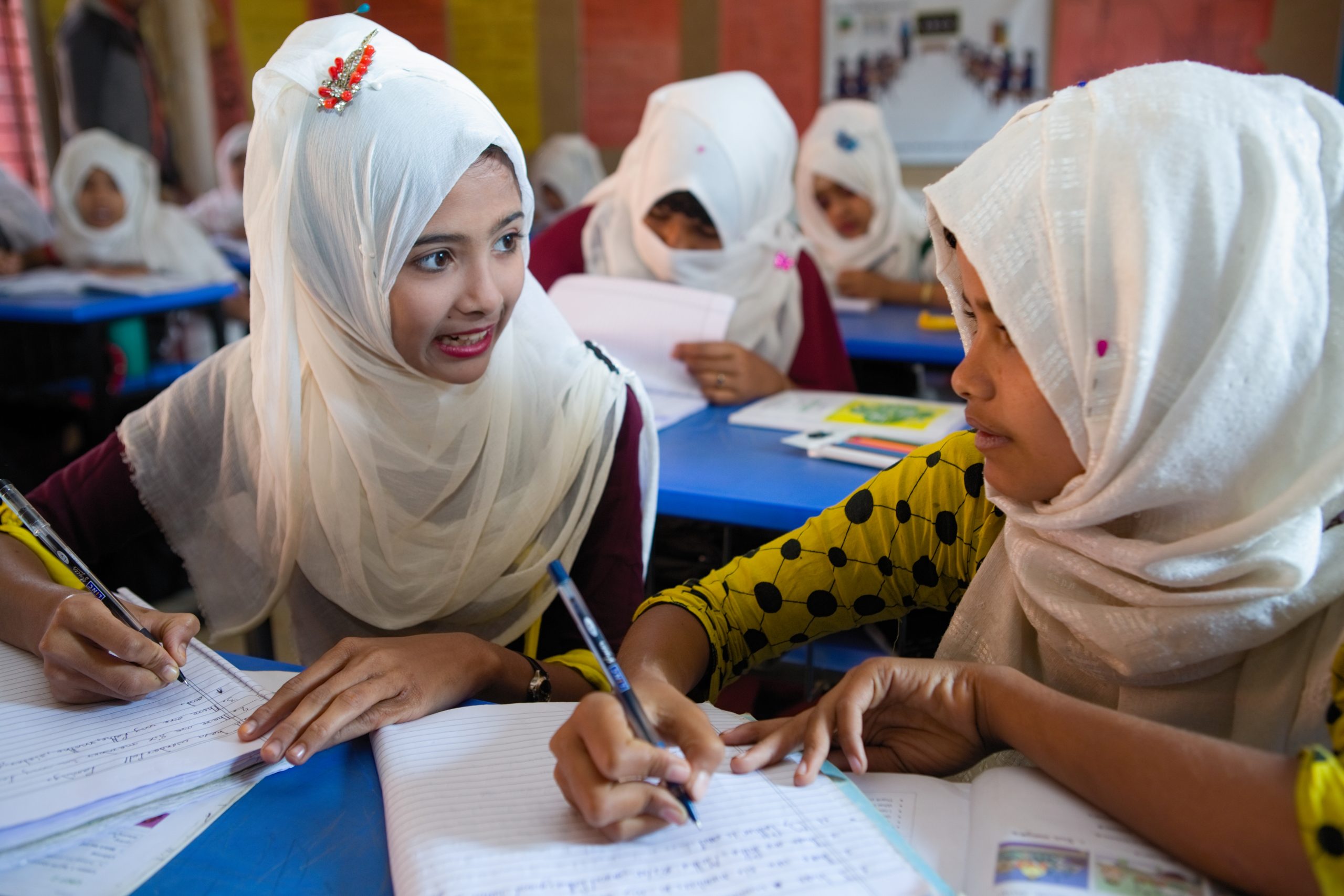
Young and adolescent girls at the UNICEF-supported learning center during their English Language session. The girls-only session is being implemented under the Myanmar Curriculum Piloting (MCP) project since May 2022. The project is being supported by UNICEF Bangladesh & implemented by Mukti at Camp 2W, Ukhiya, Cox’s Bazar on 16 February 2023. Photo ©️ UNICEF, Kiron


Download high-res photos here.

Download b-roll here


For more information please contact:

Kusali Nellie Kubwalo, UNICEF Bangladesh, Tel: +880 1847327230, [email protected]

Faria Selim, UNICEF Bangladesh, Tel: +880 181 758 6096, [email protected]

Joe English, UNICEF New York, +1 917 893 0692 [email protected]

Rohingya Struggle to Meet Their Nutritional Needs with Latest Food Ration Cuts

Rohingya Struggle to Meet Their Nutritional Needs with Latest Food Ration Cuts

By Syed Md Tafhim

Faced with a global funding shortage, the World Food Programme recently implemented a new round of food ration cuts for Rohingya refugees living in the world’s largest refugee camp.

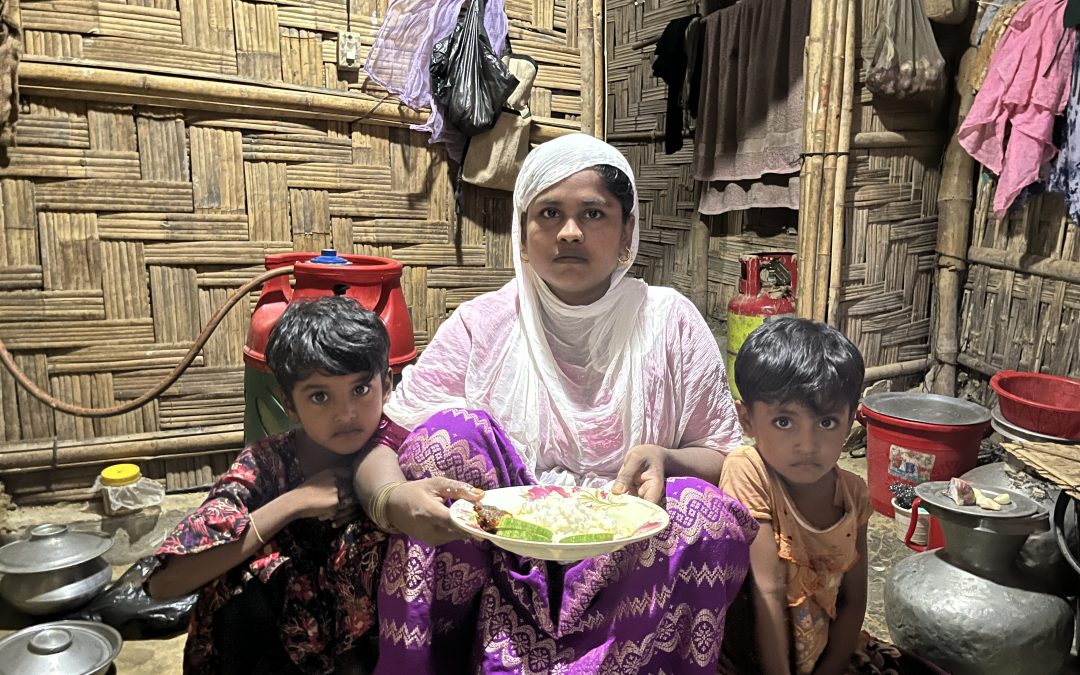
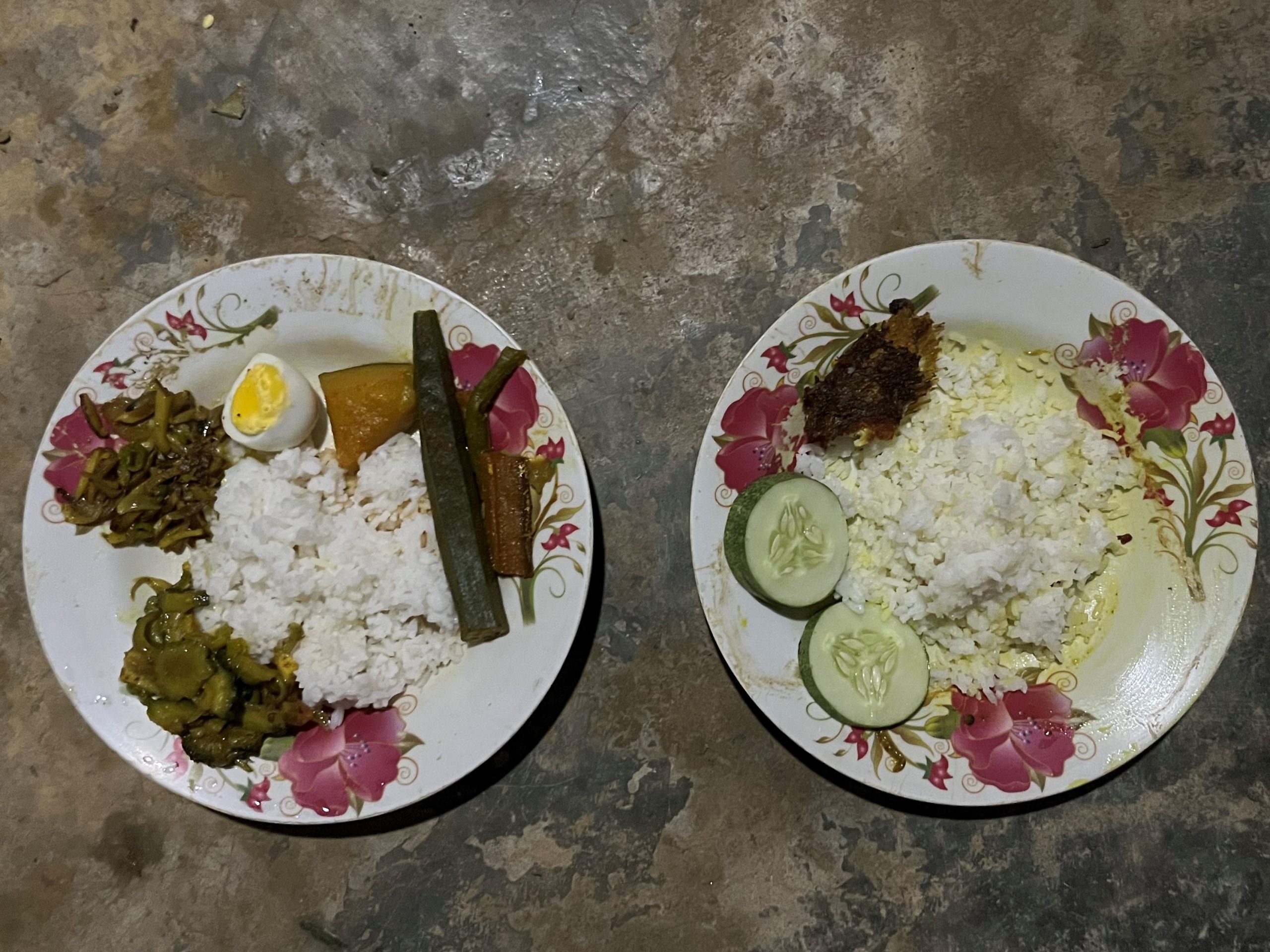
Rukhsaira is currently limited to eating only cucumbers and fish twice a day along with her children. Photo © ISCG, Arjun Jain


The nutrition and health consequences stand to be devastating, particularly for women and children and the most vulnerable in the community.

Among those affected is 27-year-old Rukhsaira, who arrived from Burma (Myanmar). Her husband tragically passed away two years ago due to illness. Now, she is trying to raise her two children on her own. She said-

“Just six months ago, three meals per day were provided to us. Our plates were filled with a variety of nutritious options, including rice, bitter gourd, potato fry, eggs, sweet pumpkins, and ladies’ finger, accompanied by small fishes. Now we can only eat twice a day with my kids with only cucumbers and fish”

Due to a massive funding shortfall, drastic measures were taken. WFP was forced to cut the value of food vouchers for camp residents for the second time in three months at the beginning of June. From receiving $12 a month at the beginning of the year, refugees saw their rations cut to $10 in March, and now to just $8, or 27 cents a day.

With rations reduced, Rukhsaira and her children were left with only two meals each day. Their diet was now limited to cucumbers and fish, lacking the diverse range of nutrients they had previously enjoyed.

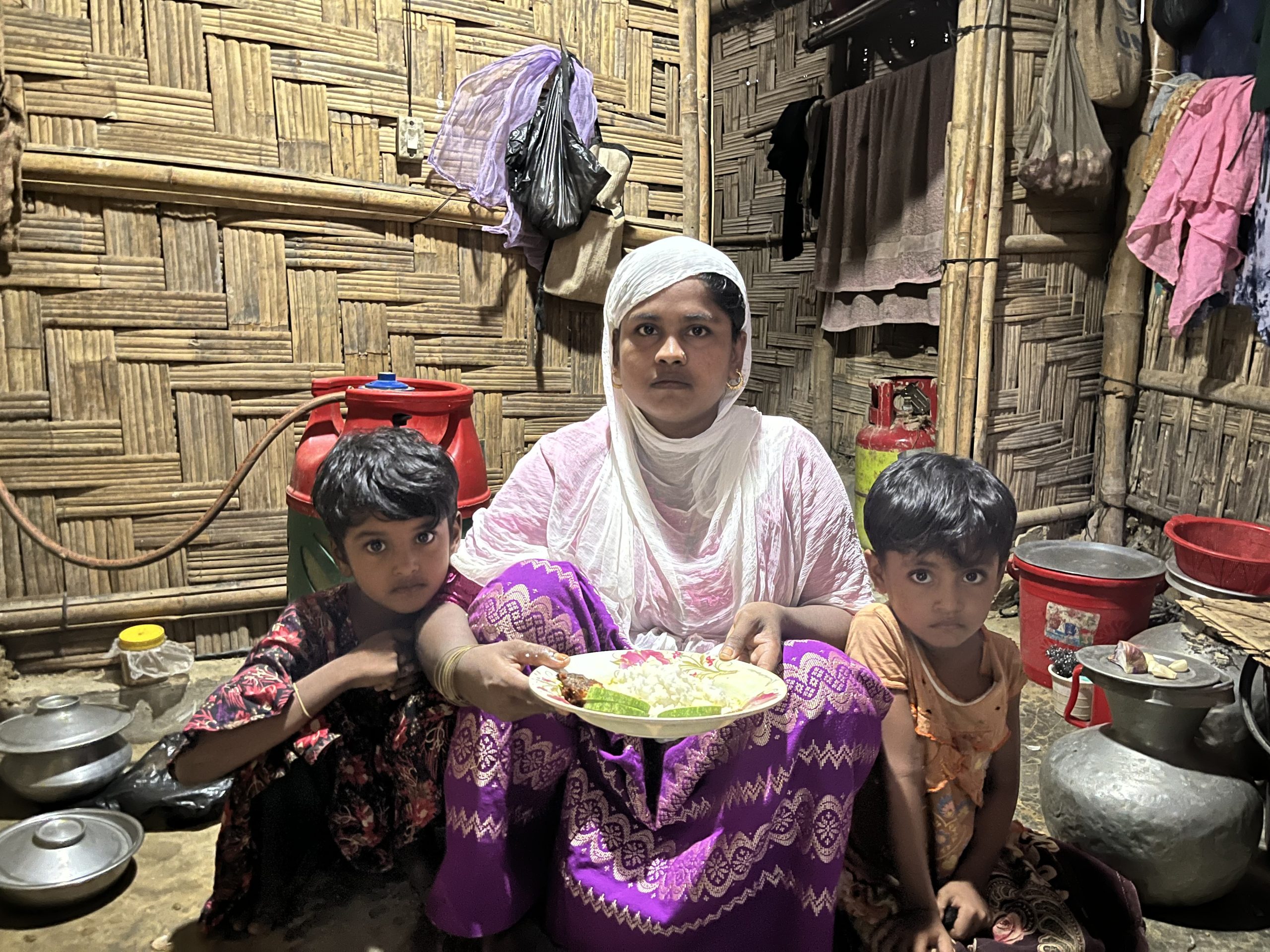
The consequences of these cuts have been severe. Previously, each person received approximately 2100 kilocalories (KCal) per day, ensuring sufficient intake for their well-being. However, the current ration provides less than 1700 KCal, exacerbating issues of malnutrition and hunger among the refugees.

The effects have been particularly pronounced among the most vulnerable individuals—children and the elderly. Their weakened immune systems have made them more susceptible to illnesses, resulting in prolonged struggles for recovery.

In addition to the physical challenges, the emotional toll on the refugee community has been substantial. Feelings of abandonment and insignificance have permeated throughout the camp as refugees face increasing anxiety and the reality of uncertain mealtimes. The burden weighs heavily on their minds, compounding the stress and anxiety already inherent in their displaced lives.

This photo illustrates the stark consequences of the Food Ration Cut. Rukhsaira’s family, who once enjoyed three meals a day with an intake of 2,100 Kcal, now struggle with less than 1,700 Kcal per person per day. Photo © ISCG

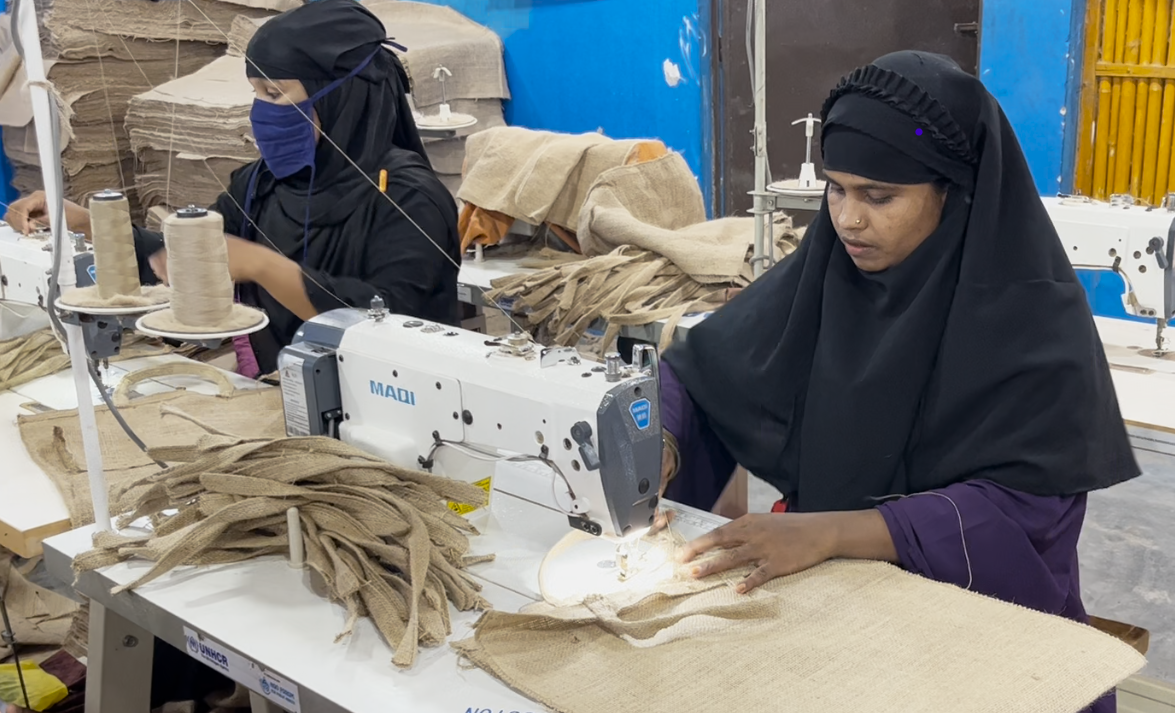
Despite these hardships, Rukhsaira considers herself relatively fortunate compared to others in the camp. As a single female head of household, she has been granted the opportunity to work in a Jute Production Centre, earning a modest income that helps meet the urgent needs of her family. Unfortunately, the vast majority of families lack this privilege, further exacerbating their precarious situation.

Rukhsaira, a single mother, finds employment through UNHCR-supported national NGO named NGO Forum, enabling her to purchase additional food from the market. Photo © ISCG


They continue to live in dire conditions, struggling to feed their children while witnessing the further deterioration of their already fragile health. Each day is a battle for survival, characterized by limited resources and an uncertain future.

Their hope now lies with the international community, as the United Nations and its partners fervently appeal for assistance and support to ensure that no one within the refugee camp goes hungry.


Media Contacts:

In Dhaka: Igor Sazonov, UN Resident Coordinator’s Office, [email protected], +8801321169633

In Cox’s Bazar: Syed Md Tafhim, Inter Sector Coordination Group, [email protected], +8801850018235 and Faik Uyanık, Inter Sector Coordination Group, [email protected], +8801847421667