- Flash Appeal for New Arrivals and Urgent Priorities: Addressing the Most Pressing Needs of the Joint Response Plan – 2025
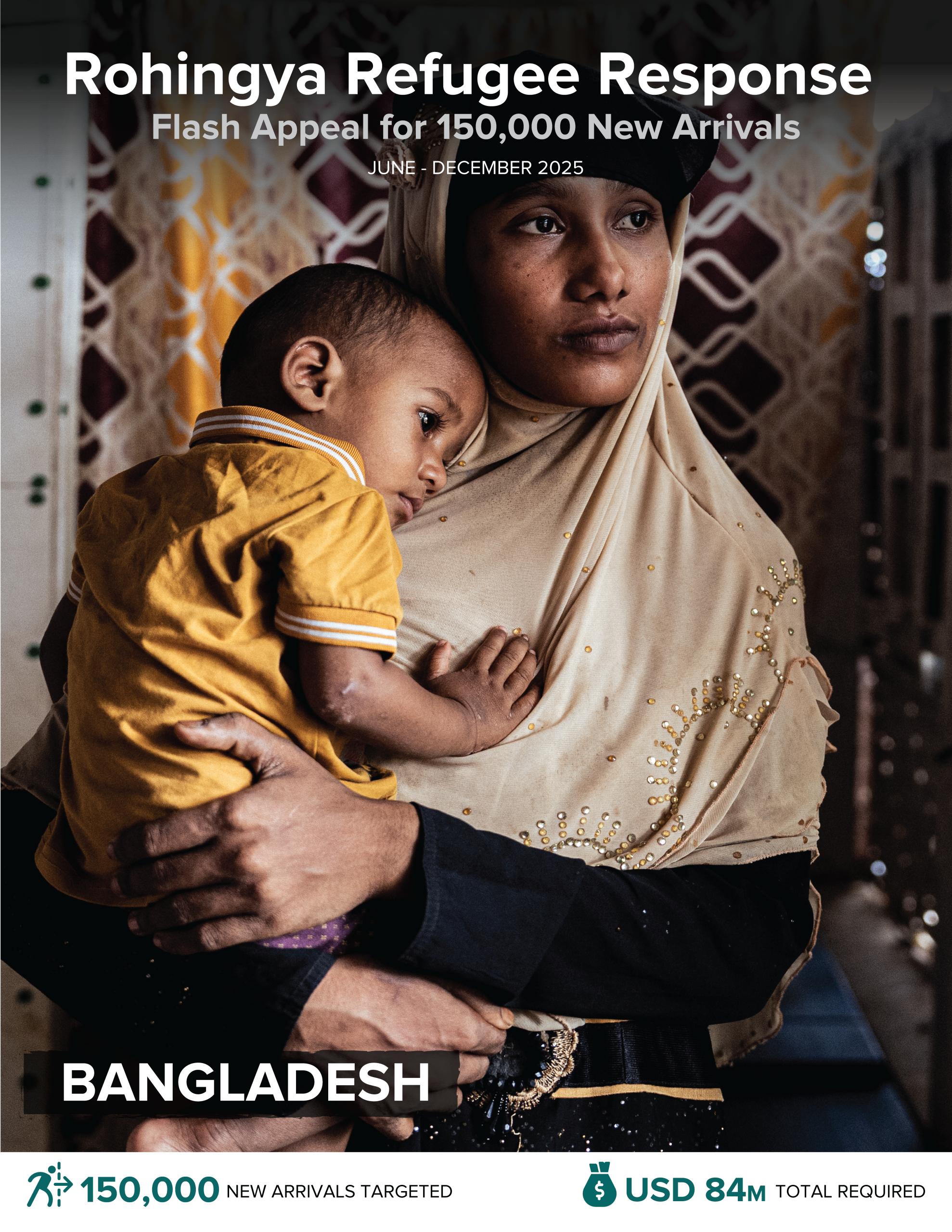
Flash Appeal for 150,000 New Arrivals
A total of USD 84 million is urgently required to meet the lifesaving and critical needs of an estimated 150,000 additional new refugee arrivals. 50,000 new arrivals were already accounted for in the initial JRP plan, but the number of new arrivals has largely overtaken these planning figures. At the date of publication of this appeal, more than 120,000 people have been biometrically identified, and thousands more are waiting to be identified, and still, Rohingya are crossing the border fleeing violence in Rakhine.
This appeal outlines the needs, proposed interventions, and funding required to provide emergency and essential humanitarian assistance including food, shelter, water, healthcare, nutrition, protection, and education to the new arrivals. The activities and budgets for new arrivals, summarised in this Flash Appeal, are aligned with the “Urgent Priorities: Addressing the Most Pressing Needs of the Joint Response Plan” document to ensure equity across all camps. It is important to note that these activities will be undertaken within the existing camp in Cox’s Bazar, and do not cover the costs associated with an extension of the camp to accommodate new shelters as this has not yet been approved by the Government of Bangladesh. Consequently, the needs outlined in this appeal are limited to lifesaving/critical activities. This appeal, spanning 1 June to 31 December 2025, is focused exclusively on refugees and Forcibly Displaced Myanmar Nationals (FDMNs) residing in the camps. It does not include host community members, whose needs are already included in the 2025 Joint Response Plan.
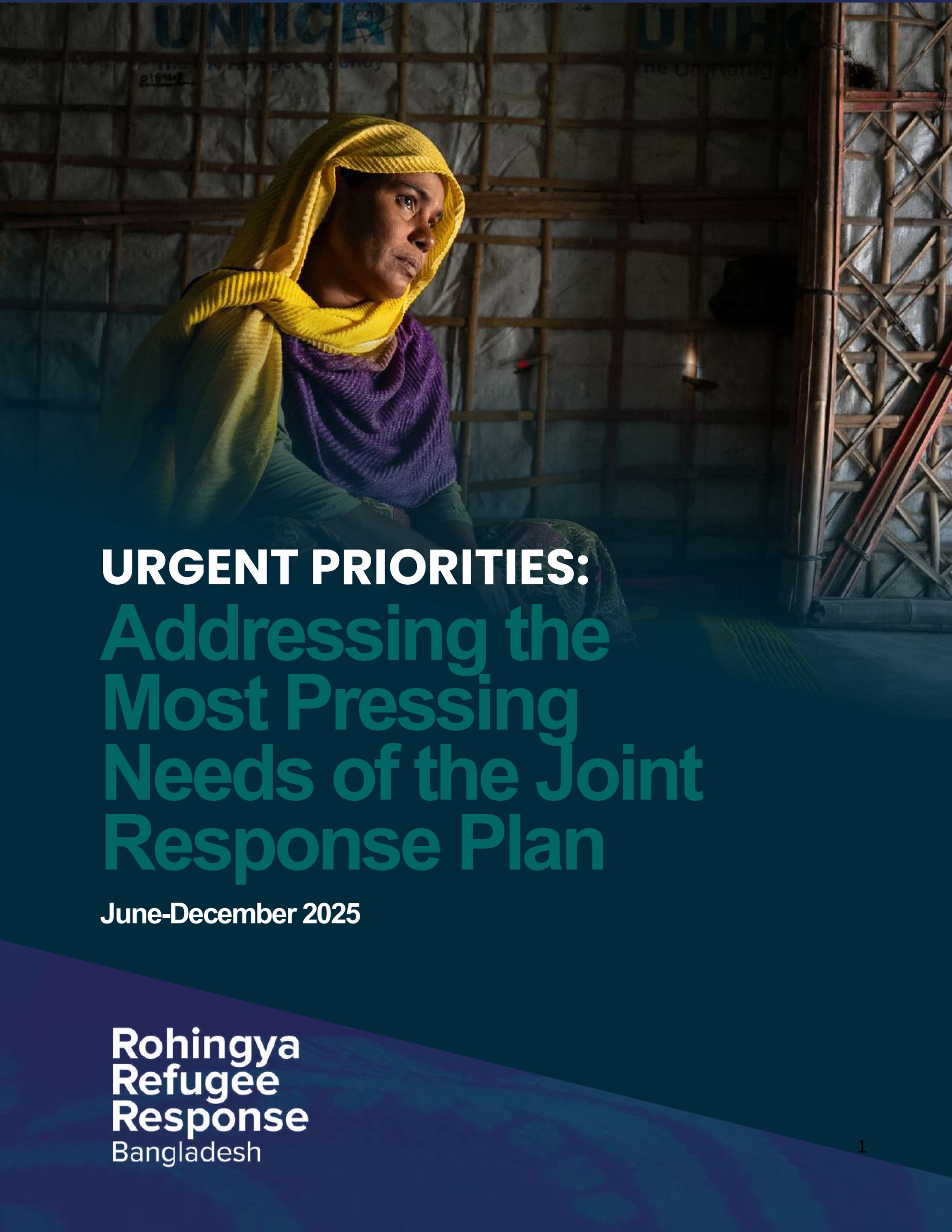
Prioritized Joint Response Plan 2025
In 2025, US$455.6 million is required to fund 1 Priority Activities, as part of an essential minimum package of humanitarian assistance and services that must be supported to save lives and prevent the most acute protection risks.
The Rohingya refugee response in Bangladesh is facing an increasingly precarious funding environment amidst a global decline in humanitarian assistance. The Joint Response Plan 2025 (JRP), launched jointly by the Government of Bangladesh and the humanitarian community on 24 March 2025, appealed for US$934.5 million to meet the needs of 1.09 million refugees and 392,000 members of host communities. However, significant reductions in donor contributions in 2025 have necessitated an urgent and extensive reprioritization of activities, with approximately 49% of the original appeal required for critical, life-saving interventions.
As of April 2025, a funding gap of approximately US$176 million persists for these “first priority” needs, in addition to an unmet requirement of US$84 million to address the immediate humanitarian needs of an estimated 150,000 new refugee arrivals who were not accounted for in the initial JRP plan.
Without urgent international support, critical services such as food assistance, education, LPG distribution, hygiene, and health services risk severe disruption. Meanwhile, basic infrastructure, including shelters, will rapidly deteriorate if not maintained, and humanitarian partners will be unable to prevent or respond to the life-threatening impacts of natural disasters. Declining support will negatively impact the refugee camps and surrounding communities, forcing already vulnerable refugees to adopt increasingly desperate and harmful coping strategies, as well as putting at risk the peaceful coexistence between communities.