
-
 Housing, Land & Property Working Group
Page Contents
What is HLP?
HLP issues in Bangladesh
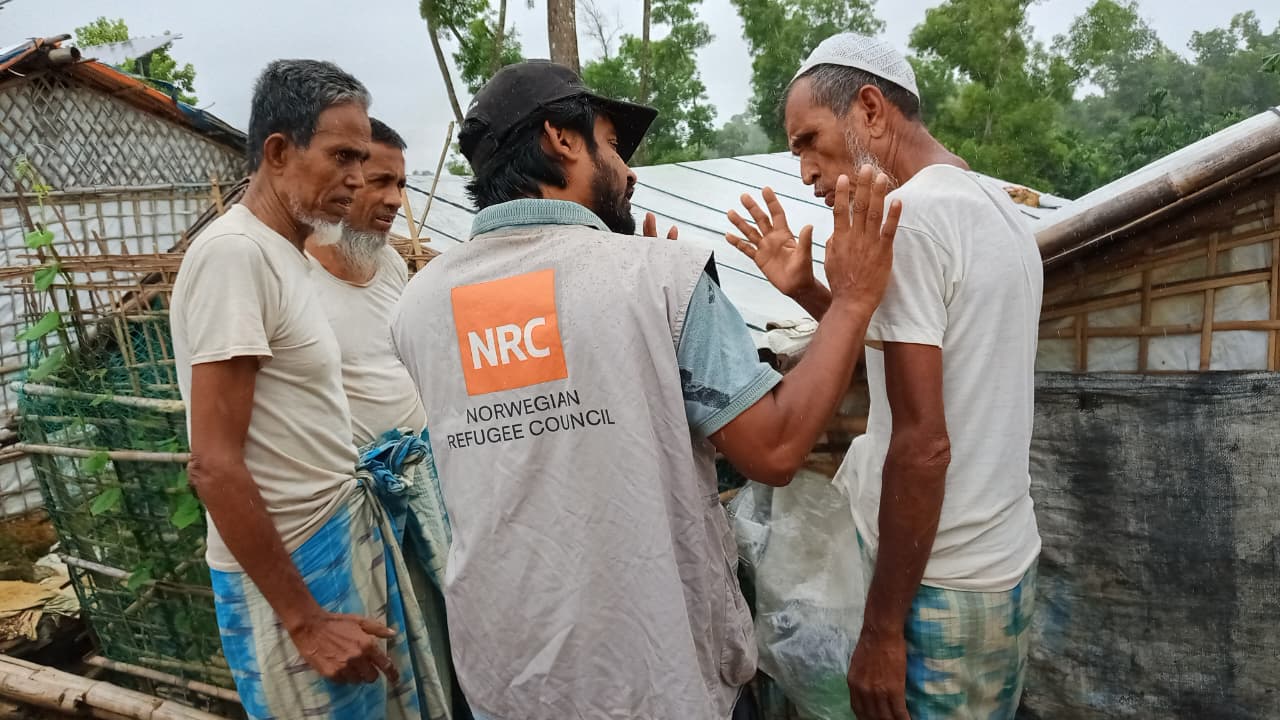
Access to Housing, Land, and Property (HLP) rights has long been a challenge for Rohingya refugees in Bangladesh, but the situation has worsened for the new arrivals since 2024. Due to administrative constraints, many of these newly arrived refugees have not been allocated shelters and are forced to rely on relatives, rent land or shelter informally, or purchase shelters through unregulated arrangements with third parties claiming ownership. Bangladesh’s complex land management system, particularly the practice of establishing “use rights” on social forestry land, often disrupts tenure security—especially in Ukhiya—through land claims and rent demands by host community members.
Without formal refugee status under Bangladeshi law, Rohingya refugees cannot easily enter legal contracts, making it difficult to secure written tenure agreements. This leaves them vulnerable to arbitrary rent increases, forced evictions, and other land-related disputes, even on land designated as public or humanitarian use. The absence of legal recognition, combined with informal and often exploitative arrangements, significantly increases protection risks. Overcrowded or substandard shelter conditions are common, with women, the elderly, and persons with disabilities facing heightened vulnerability due to limited access to secure, dignified housing.
HLP Working Group in Bangladesh
The HLP Working Group aims to strengthen tenure security and ensure equitable access to housing, land, and property for Rohingya refugees and host communities in Cox’s Bazar. It focuses on preventing evictions, resolving land disputes, and mitigating protection risks stemming from informal shelter arrangements, arbitrary rent increases, and the absence of legal tenure. Coordinated under the Protection Sector and co-led by NRC, the HLP WG is supported by actors from SCCCM, WASH, and other sectors. It plays a critical role in guiding strategic interventions, conducting assessments, and advancing policy and advocacy efforts to safeguard HLP rights. The response is grounded in cross-sectoral collaboration and emphasizes localized solutions, capacity strengthening, and evidence-based planning.
Summary of Total Beneficiaries Assisted
| In 2025 |
5,260 Total beneficiaries |
47% Percentage of women |
207 Persons with disability |
230 Beneficiaries needing support to prevent eviction |


| In 2024 |
6,761 Total beneficiaries |
49% Percentage of women |
202 Persons with disability |
879 Beneficiaries needing support to prevent eviction |
| In 2023 |
4,344 Total beneficiaries |
42% Percentage of women |
164 Persons with disability |
825 Beneficiaries needing support to prevent eviction |
Strategy Documents
Resources
- Map of HLP issues in 2024 and 2025
- HLP Position Paper - 2026
- Explanatory Note to Clarify the Use of “HLP Rights” in the Rohingya Response
- HLP Situation of Newly Arrived Refugees in Cox's Bazar -Assessment Report - January 2026
- NRC Bangladesh - Needs Assessment: Housing, Land and Property in Cox’s Bazar Camps - January, 2026
- Overview – Rohingya Housing, Land and Property (HLP) Issues, January–June 2025, Cox’s Bazar, Bangladesh
- Brief Analysis of the HLP Situation in Camps - August 2024
- Overview - Rohingya Housing, Land, and Property Issues in 2024 - Cox’s Bazar, Bangladesh
- Overview - Rohingya Housing, Land, and Property Issues in 2023 - Cox’s Bazar, Bangladesh
Members
Co-Chairs: Protection Sector and NRC
HLP WG Members: Action Aid Bangladesh, Bangladesh Legal Aid and Services Trust (BLAST), BRAC, Danish Refugee Council (DRC), International Organization for Migration (IOM), International Rescue Committee (IRC), Mukti Cox’s Bazar, Norwegian Refugee Council (NRC), Oxfam, and United Nations High Commissioner for Refugees (UNHCR).
Contacts
Ezzatullah Raji
Housing Land and Property (HLP) Adviser
Mobile: +8801842155723
Email: [email protected]
Mehtab Samir Sayem
ICLA Project Manager
Mobile: +8801673259688
Email: [email protected]